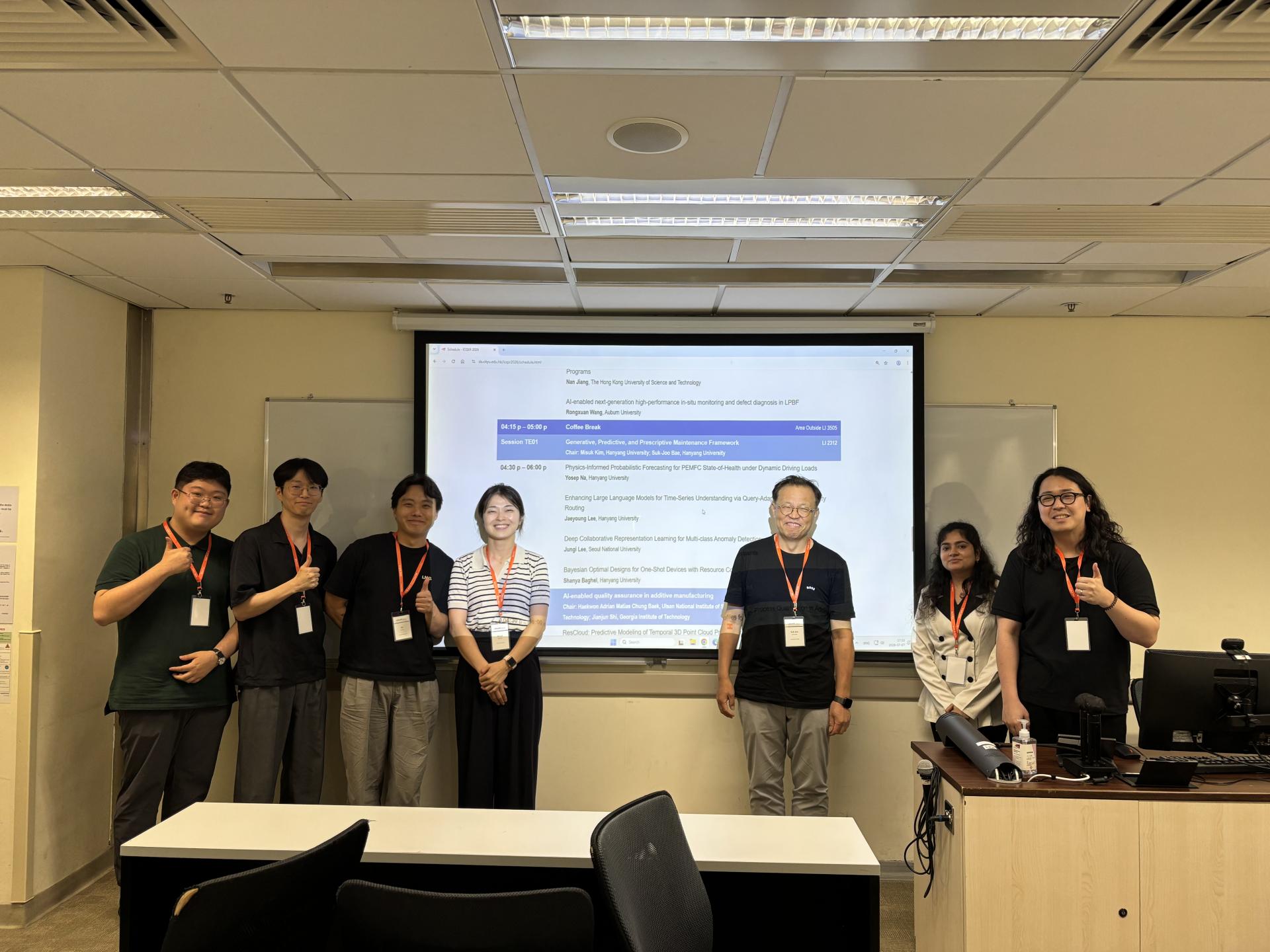
The Global Research Laboratory (GRL) participated in the 2026 INFORMS Conference on Quality, Statistics, and Reliability (ICQSR), held in Hong Kong from July 5 to 9, 2026, for a five-day, four-night program.
Researchers participating in the advanced research project attended the conference and presented key research outcomes on a wide range of topics closely aligned with the research directions of their respective laboratories.
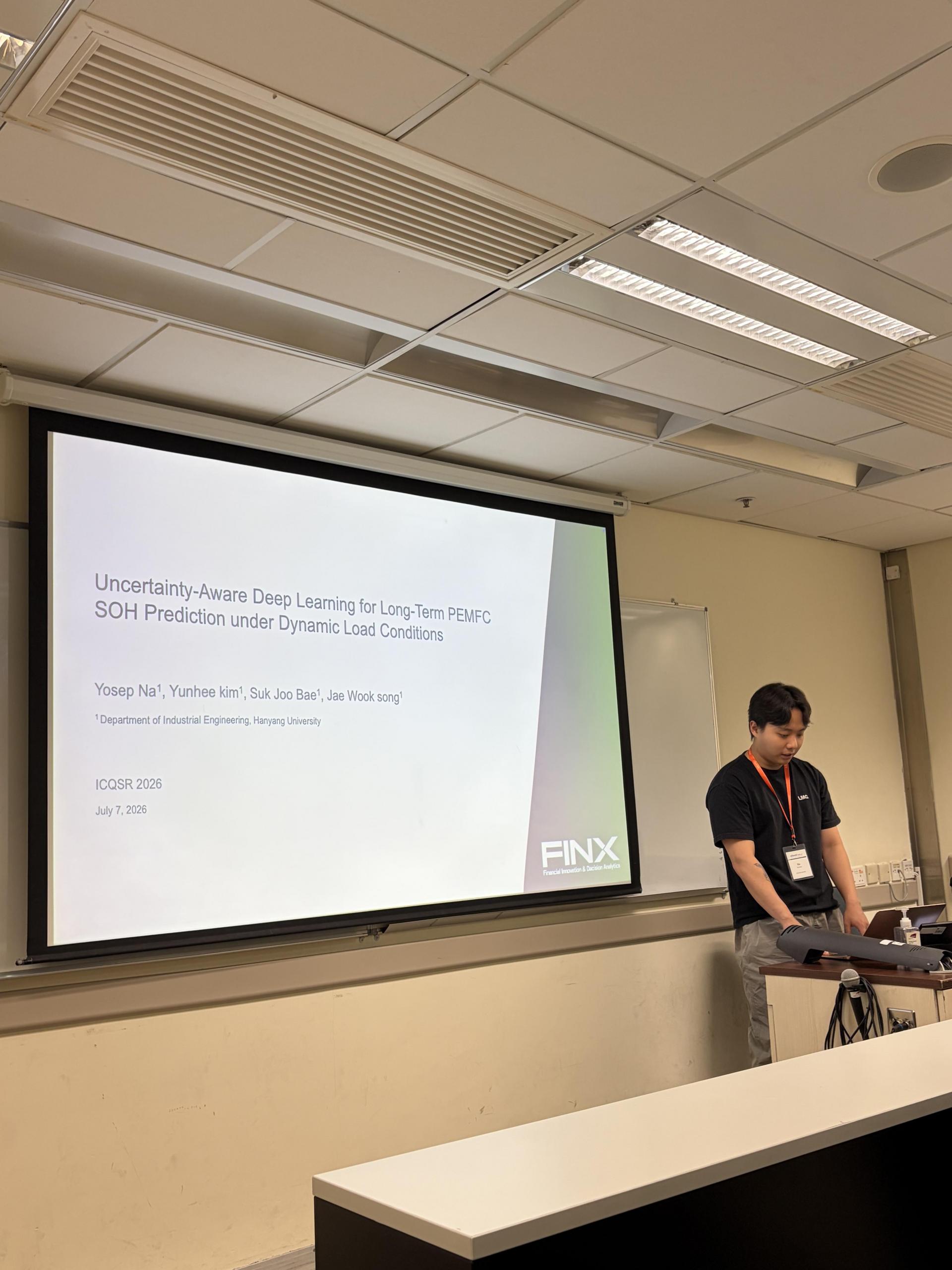
Yosep Na of Hanyang University presented a study titled “Physics-Informed Probabilistic Forecasting for PEMFC State-of-Health under Dynamic Driving Loads,” which introduced a probabilistic approach to forecasting the state of health of proton exchange membrane fuel cells under dynamic driving load conditions.
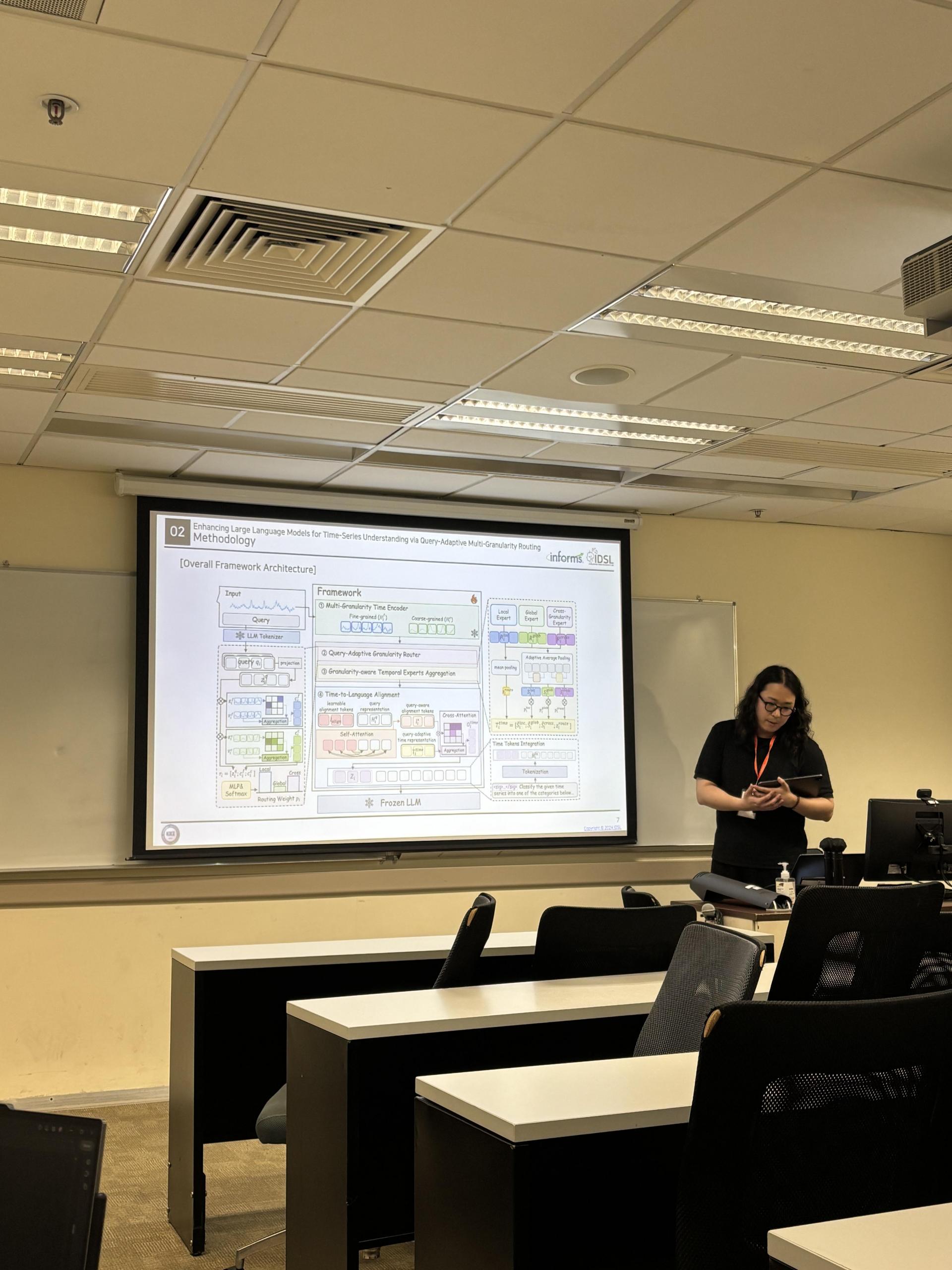
Jaeyoung Lee of Hanyang University presented “Enhancing Large Language Models for Time-Series Understanding via Query-Adaptive Multi-Granularity Routing,” introducing a query-adaptive multi-granularity routing method designed to improve the time-series understanding capabilities of large language models.
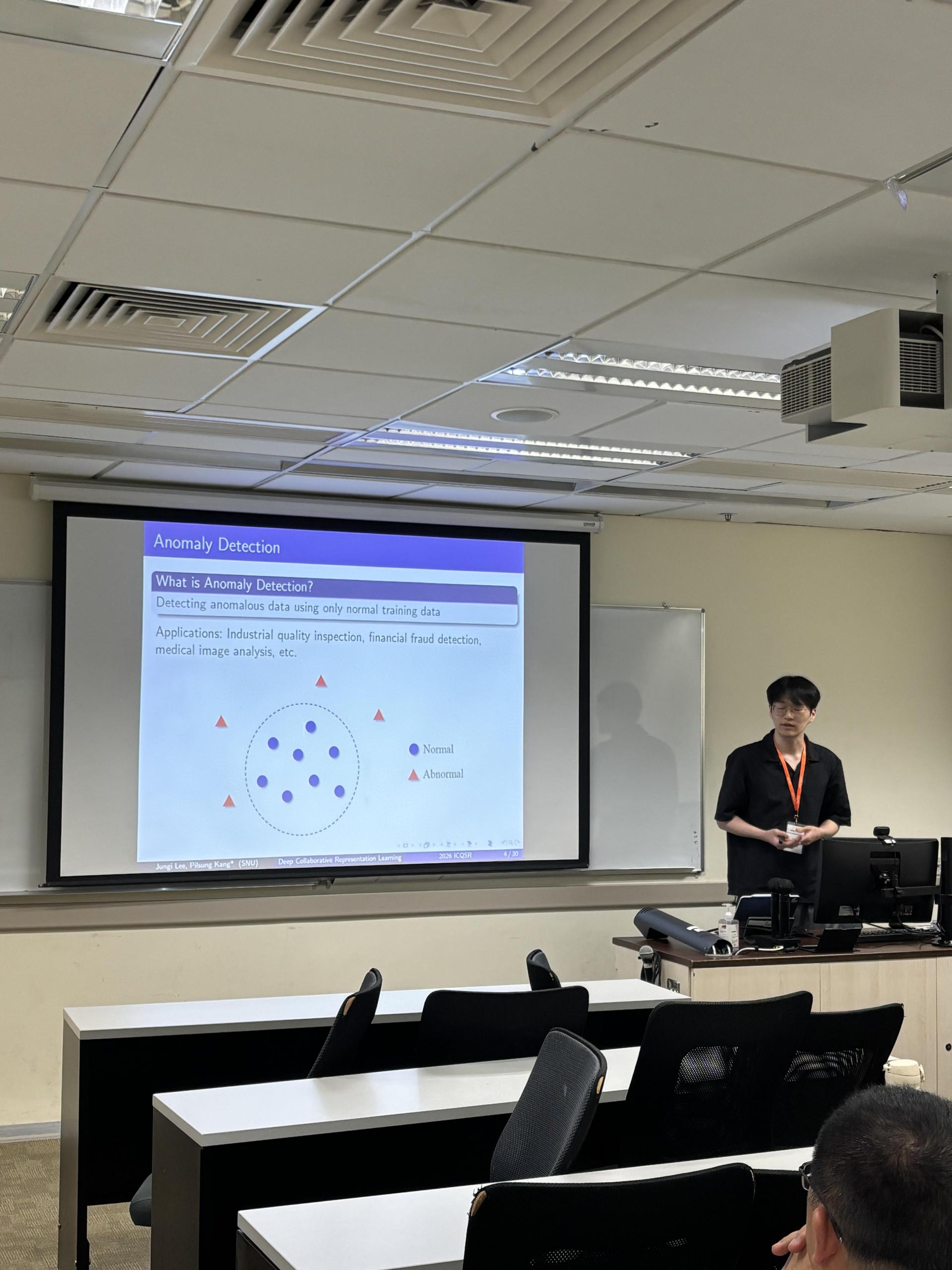
Junki Lee of Seoul National University presented “Deep Collaborative Representation Learning for Multi-class Anomaly Detection,” proposing a deep collaborative representation learning framework for multi-class anomaly detection.
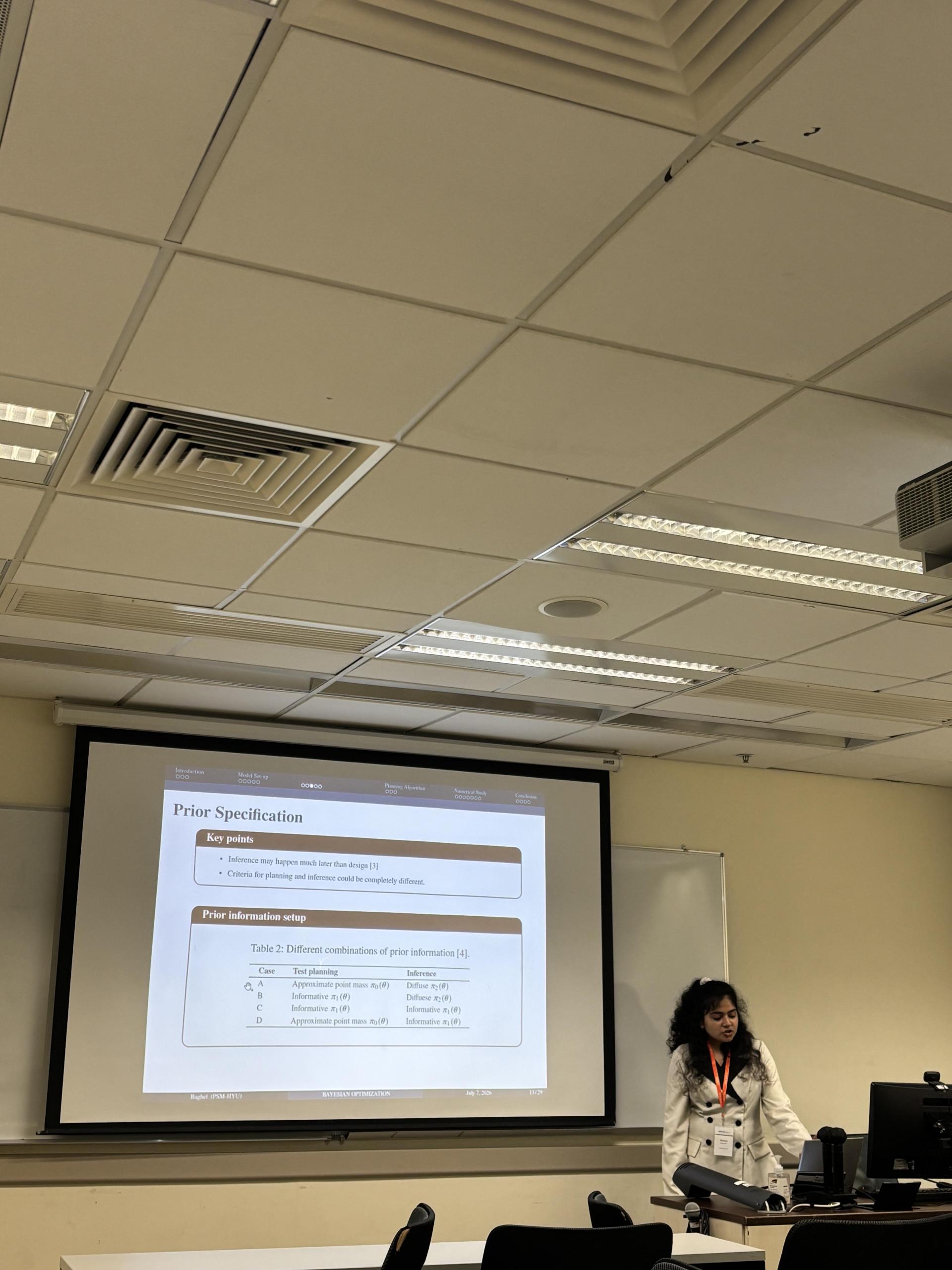
Shanya Baghel of Hanyang University also presented “Bayesian Optimal Designs for One-Shot Devices with Resource Constraints,” in which she proposed a Bayesian optimal design methodology for experiments involving one-shot devices under resource constraints.
Through their participation in ICQSR 2026, the researchers involved in the Basic Research Laboratory project shared a diverse range of research outcomes with the international academic community, covering reliability, quality, anomaly detection, time-series analysis, physics-informed forecasting, and optimal experimental design.
The conference also provided a meaningful opportunity for the participating researchers to reaffirm their shared research directions and further expand the potential for future interdisciplinary research and collaboration.



The Global Research Laboratory (GRL) participated in the 2026 INFORMS Conference on Quality, Statistics, and Reliability (ICQSR), held in Hong Kong from July 5 to 9, 2026, for a five-day, four-night program.
Researchers participating in the advanced research project attended the conference and presented key research outcomes on a wide range of topics closely aligned with the research directions of their respective laboratories.
Yosep Na of Hanyang University presented a study titled “Physics-Informed Probabilistic Forecasting for PEMFC State-of-Health under Dynamic Driving Loads,” which introduced a probabilistic approach to forecasting the state of health of proton exchange membrane fuel cells under dynamic driving load conditions.
Jaeyoung Lee of Hanyang University presented “Enhancing Large Language Models for Time-Series Understanding via Query-Adaptive Multi-Granularity Routing,” introducing a query-adaptive multi-granularity routing method designed to improve the time-series understanding capabilities of large language models.
Junki Lee of Seoul National University presented “Deep Collaborative Representation Learning for Multi-class Anomaly Detection,” proposing a deep collaborative representation learning framework for multi-class anomaly detection.
Shanya Baghel of Hanyang University also presented “Bayesian Optimal Designs for One-Shot Devices with Resource Constraints,” in which she proposed a Bayesian optimal design methodology for experiments involving one-shot devices under resource constraints.
Through their participation in ICQSR 2026, the researchers involved in the Basic Research Laboratory project shared a diverse range of research outcomes with the international academic community, covering reliability, quality, anomaly detection, time-series analysis, physics-informed forecasting, and optimal experimental design.
The conference also provided a meaningful opportunity for the participating researchers to reaffirm their shared research directions and further expand the potential for future interdisciplinary research and collaboration.